A Sanctuary Raised on Witch‑Trial Legacies
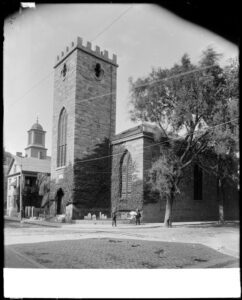 Long before its Gothic towers pierced Salem’s skyline, the ground beneath St. Peter’s–San Pedro Episcopal Church was granted in 1733 by prominent merchant Philip English—a man who narrowly escaped the gallows after being accused of witchcraft during the 1692 trials. English and his wife, Mary, fled Salem to avoid the hysteria, returning only after the worst was over. His land donation became the cornerstone for Salem’s first Anglican congregation and, inadvertently, a colonial burial ground that would not rest in peace. Read more about Philip English’s dramatic escape in the Salem Witch Trials on the Salem Witch Museum’s biography page.
Why the Graves Were Moved—and Why Some Never Left
By the 1840s Salem’s downtown merchants needed space for storefronts and factories. City leaders ordered dozens of coffins exhumed and relocated to the newly opened Harmony Grove Cemetery. Parish journals reveal that headstones were stacked against church walls “awaiting transport” yet many vanished—fuel for today’s rumors of misplaced remains beneath the nave. Contractors renovating the basement in the 1970s uncovered coffin fragments and mourning jewelry, confirming that St. Peter’s cemetery never fully left the property.
Searches like “moved graves Salem,” “lost colonial coffins,” and “hidden cemetery beneath church” all point back to St. Peter’s—making it an essential stop on any history‑meets‑haunting itinerary.
Reported Hauntings on Philip English’s Ground
-
Perfume with No Source: Congregants smell lilac—a favorite colonial scent—during silent prayers.
-
Shadow Kneeler: A dark silhouette appears at the chancel rail, then dissolves when approached.
-
Cold Vortex by Vestry Door: EMF meters and thermal cameras record sharp drops where exhumation tunnels once began.
These anomalies keep St. Peter’s high on lists ranking the “most haunted churches in New England.”
Visiting Tips
-
Daytime Tours: The parish occasionally opens for guided history walks; respect roped‑off areas where ground subsidence is possible.
-
Night Photography: Set a long exposure toward the vestry side—orb activity spikes after 10 p.m.
-
Grave Markers: A few original stones survive in the courtyard; inscriptions date back to 1730s Anglicans who worshipped on land gifted by a witch‑trial fugitive.
Experience Salem’s Haunted History in Person
Explore St. Peter’s churchyard—along with Charter Street Cemetery, the Witch House, and other witch‑trial landmarks—on our small‑group night walk. Lantern spots fill fast every October.
→ Reserve your place now
Step onto Philip English’s donation, feel the chill of relocated coffins, and decide for yourself if the spirits here have truly forgiven—or are still pleading their case after 300 years.